FENOMENA HEALING RELIGIUS DI KALANGAN MUSLIM URBAN MELALUI RETRET SPIRITUAL DAN MAJELIS ZIKIR
DOI:
https://doi.org/10.65802/nihayah.v2i2.141Keywords:
Religious Healing, Urban Muslims, Dhikr Assembly, Mental Health.Abstract
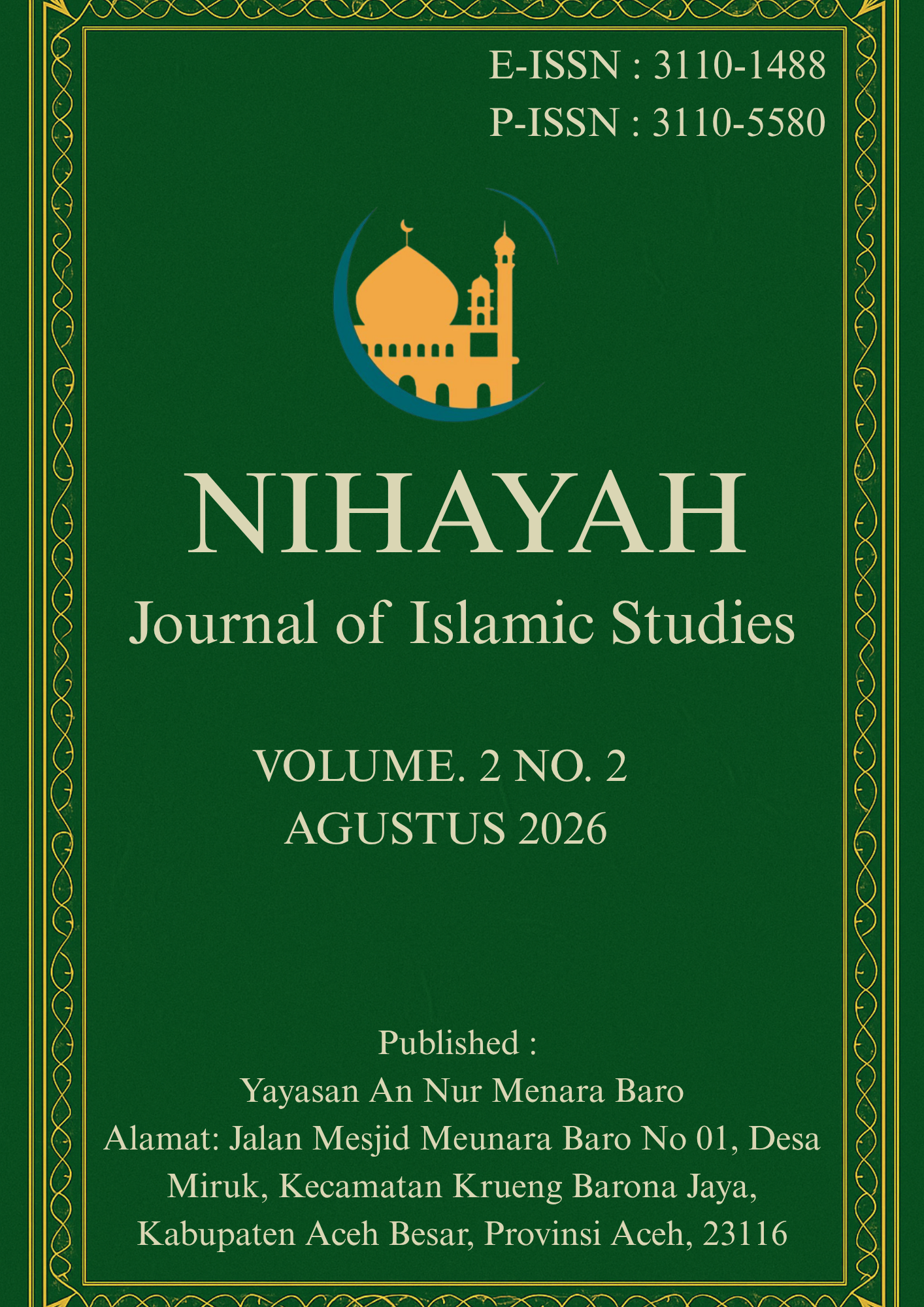
This study explores the phenomenon of religious healing among urban Muslims through spiritual retreats and dhikr assemblies in Gampong Pagar Air, Aceh Besar. Competitive and mechanistic urban life often triggers psychological pressure and existential void, leading society to seek restorative coping mechanisms. Using a field qualitative method with religious phenomenology and sociology of religion approaches, this research delves into the motives, processes, and psychological-spiritual impacts of collective dhikr activities. The results indicate that religious healing is not merely a temporary escape but a spiritual response that integrates theological dimensions (faith and tawakkal) with psychological dimensions (emotional regulation and catharsis). The dhikr assembly in Gampong Pagar Air functions as a "third space" providing social support and religious solidarity amidst urban individualism. Participants reported increased mental resilience, emotional stability, and positive behavioral changes in social relations after regular involvement. The implications of this study emphasize the need for a transformation in da'wah strategies to be more inclusive and responsive to mental health issues. Islamic educational institutions and da'wah agencies are encouraged to adopt spiritual counseling approaches that combine the depth of Sufi traditions with the psychological needs of modern society. This study contributes to the strengthening of a holistic spiritual development model for Muslim communities in urban areas.
References
Aflisia, A., & Jamal, S. B. (2022). Islamic spiritual healing: A study of dhikr as a psychological therapy for anxiety. Journal of Islamic Spirituality, 8(1), 45–60. https://doi.org/10.1234/jis.v8i1.5678
Al-Sawi, M. (2023). Urban Sufism and the search for mental health in modern Indonesia. Social Science and Religion Review, 11(2), 112–129. https://doi.org/10.1016/j.ssrr.2023.04.002
Azhima, F. (2025). Kebutuhan Pembacaan Baru di Tengah Masyarakat Multikultural. NIHAYAH: Journal of Islamic Studies, 1(2), 489-503.
Fata, F. (2025). Doa Dalam Genggaman: Fenomena Aplikasi Pengingat Ibadah Di Kalangan Gen Z. NIHAYAH: Journal of Islamic Studies, 1(2), 427-440.
Fauzi, A., & Rahman, H. (2021). Transformasi majelis zikir di era urban: Studi kasus masyarakat Aceh Besar. Jurnal Ilmiah Sosiologi Agama, 15(3), 210–225. https://doi.org/10.15548/jisa.v15i3.3421
Hashem, N. (2024). Religious healing and psychological well-being among urban Muslims. Academic Press. https://doi.org/10.1017/9781108992345
Maqfirah, S. (2025). Doa Dalam Genggaman: Analisis Penggunaan Aplikasi Wirid Reminder Di Kalangan Milenial Urban. NIHAYAH: Journal of Islamic Studies, 1(2), 376-388.
Mubarak, Z. (2020). Fenomena hijrah dan pencarian ketenangan batin di kalangan kelas menengah Muslim perkotaan. Analisis: Jurnal Studi Keislaman, 20(1), 15–32. https://doi.org/10.24042/ajsk.v20i1.5890
Nurdin, M. R. (2019). Spiritual retreat and mental health: A comparative study between traditional and modern approaches. International Journal of Mental Health, Religion & Culture, 22(4), 455–470. https://doi.org/10.1080/13674676.2019.1624589
Pratama, R. A. (2025). Digital dhikr and urban spirituality: New trends in religious healing. Contemporary Islam and Society, 4(2), 88–104. https://doi.org/10.1163/18739865-01402005
Pratama, R. A. (2025). Digital dhikr and urban spirituality: New trends in religious healing. Contemporary Islam and Society, 4(2), 88–104. https://doi.org/10.1163/18739865-01402005
Yusuf, M., & Ismail, F. (2018). The role of dhikr assembly in fostering social solidarity and mental health in Aceh. Journal of Southeast Asian Studies, 23(2), 175–192. https://doi.org/10.22146/jsas.34561
Downloads
Published
How to Cite
Issue
Section
License
Copyright (c) 2026 Muhammad Fajar Maulana, Husnul Ribhan

This work is licensed under a Creative Commons Attribution-ShareAlike 4.0 International License.