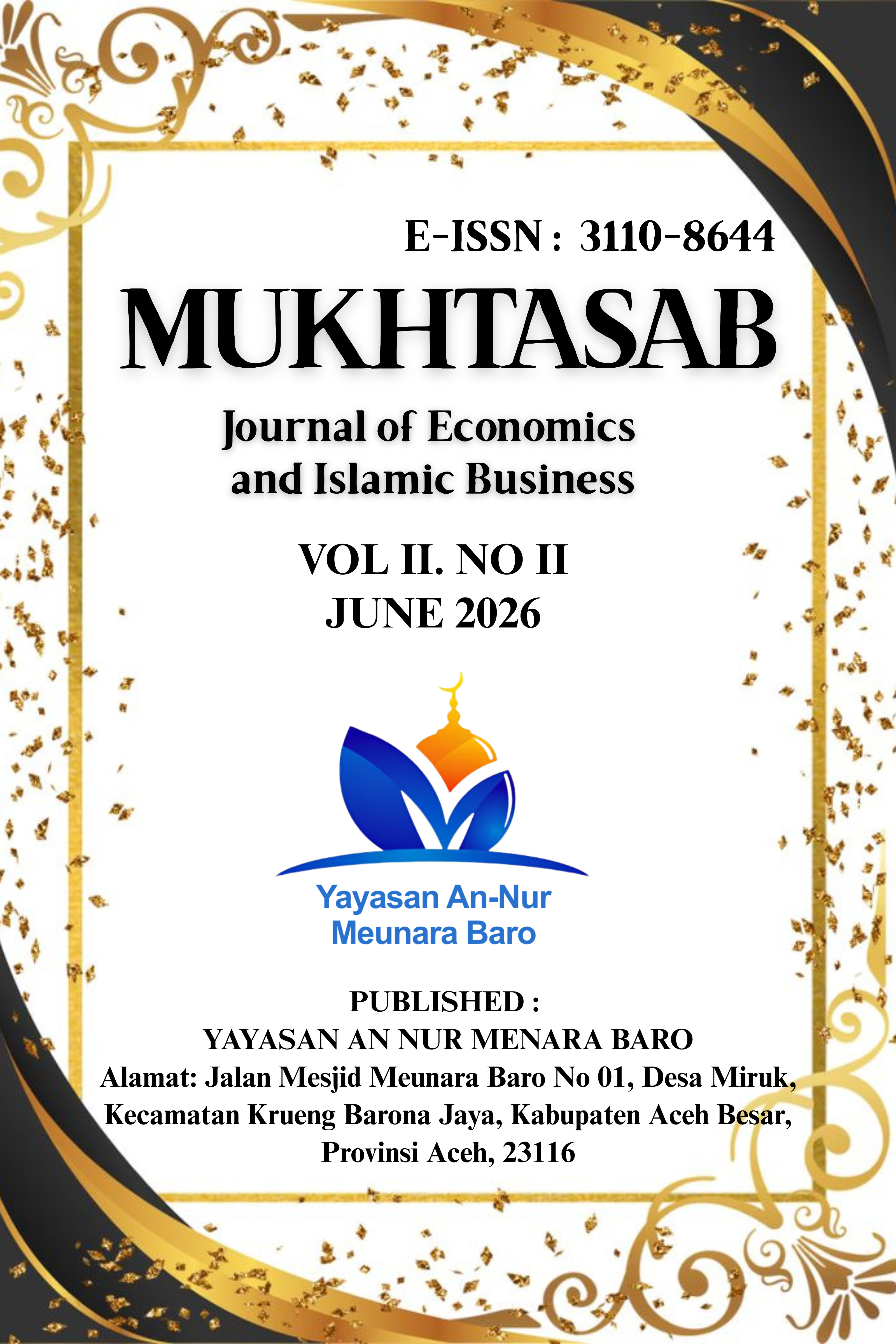
THE IMPLEMENTATION OF ISLAMIC BUSINESS ETHICS IN DIGITAL MARKETING PRACTICES ON SOCIAL MEDIA
DOI:
https://doi.org/10.65802/mukhtasab.v2i2.160Keywords:
Social Media Marketing, Islamic Ethics, Marketing Langit, Digital Integrity, Netnography.Abstract
The digital landscape has witnessed a radical shift where social media platforms have become the primary marketplace. However, this transformation is often accompanied by the marginalization of ethical boundaries as brands prioritize algorithmic engagement and virality over moral integrity. In the pursuit of clicks and shares, unethical practices such as deception (gharar) and excessive exaggeration (tashni’) have become prevalent. This study aims to investigate the integration of Islamic business ethics specifically the prophetic traits of Siddiq, Amanah, Tabligh, and Fathanah into social media marketing strategies on platforms such as Instagram, TikTok, and Facebook. This research employs a qualitative approach using Netnography and Critical Discourse Analysis. The study focuses on prominent Sharia-branded business accounts as case studies, analyzing digital artifacts including video content, captions, and consumer-brand interactions in the comment sections. The results identify a significant alignment between successful ethical branding and the implementation of radical honesty in product descriptions, visual authenticity (avoiding deceptive filters), and the use of gentle communication (Qaulan Layyinan) in handling complaints. Furthermore, the study discovers the emergence of the Marketing Langit (Heavenly Marketing) model, where promotional content serves as a dual-purpose tool for commercial gain and educational dakwah. This research provides a practical and spiritual framework for Muslim entrepreneurs, demonstrating that creative digital advertising can achieve high commercial success while remaining rooted in Islamic values. By prioritizing Barakah over mere metrics, brands can foster sustainable consumer trust and contribute to a more ethical digital economy.
References
Abdullah, M. (2025). Heart-Winning Marketing: The Power of Gentle Communication in Sharia Business. Kuala Lumpur: IIUM Press.
Al-Fatih, M., & Hassan, S. (2025). Digital Da’wah and Marketing: Ethical Boundaries in the Age of Influencers. International Journal of Islamic Marketing, 12(1), 45-60. https://doi.org/10.3210/ijim.v12i1.7743
Al-Khaf, H. (2024). Digital Ethics and Reputation Management: A Sharia Perspective on Online Conflict. Journal of Islamic Communication and Media, 9(1), 55-72. https://doi.org/10.3210/jicm.v9i1.8833
Bakri, A. (2026). Transparency as Tabligh: Navigating Public Interaction in the Social Media Era. Singapore: Springer Nature. https://doi.org/10.1007/978-981-44-5566-7
Fauzi, M. R. (2025). Algorithmic Pressure and Ethical Resilience: A Study of Muslim Content Creators. Medan: Borneo Academic Press.
Gunawan, I. (2024). Conscious Capitalism in the Muslim World: Ethics, Profit, and Purpose. Singapore: NUS Press.
Hafiz, M., & Salma, N. (2025). Digital Barakah: The Intersection of Faith and Algorithms in Modern Marketing. Dubai: Islamic Fintech Press.
Ibrahim, A. (2024). Beyond Modesty: The Aesthetics of Sharia-Compliant Visual Marketing. International Journal of Islamic Art and Design, 11(2), 88-103. https://doi.org/10.3210/ijiad.v11i2.4412
Mansur, R. (2025). Digital Muamalah: Safeguarding Consumer Rights in E-Commerce. Jakarta: Prenada Media.
Nasution, R. (2026). Marketing Langit: Transforming Business into Dakwah in the Digital Era. Medan: Borneo Academic Press.
Rahmadani, S. (2024). The Attention Economy and Moral Crisis: A Critical Review of Digital Deception. London: Academic Press Global.
Rahman, A., & Aziz, S. (2024). The End of the Filter Era: Visual Authenticity and Trust in Social Media Marketing. Journal of Digital Business Ethics, 9(3), 210-225. https://doi.org/10.3210/jdbe.v9i3.8821
Ramli, S. (2024). Slow Marketing: Building Sustainable Brand Loyalty in the Fast-Paced Digital Age. Jakarta: Prenada Media.
Sari, D. P., & Rahman, F. (2024). Consumer Loyalty and Ethical Interaction: A Study of Sharia-Branded Communities on TikTok. International Journal of Sharia Marketing, 11(2), 130-145. https://doi.org/10.20885/ijsm.vol11.iss2.art5
Syahputra, I. (2026). The Sharia Digital Strategist: Navigating Algorithms with Faith and Intelligence. Singapore: Springer Nature. https://doi.org/10.1007/978-981-55-6677-8
Syarif, M. (2026). The Power of Authenticity: Building Brand Integrity in the Digital Ummah. Medan: USU Press.
Yusuf, M. (2023). Integrity-Based Marketing: Integrating Prophetic Traits into Modern Corporate Strategy. Journal of Business Ethics and Islamic Values, 8(2), 112-128. https://doi.org/10.15575/jbeiv.v8i2.6612
Zulkarnain, F. (2025). Ethics of Influence: Talent Selection and Modesty in Social Media Advertising. Jakarta: Gramedia Pustaka Utama.
Zulkarnain, F., & Putri, A. (2026). Social Media Ethics: Navigating Sharia Principles in the Digital Marketplace. Singapore: Springer Nature Islamic Studies Series. https://doi.org/10.1007/978-981-19-1234-5
Downloads
Published
How to Cite
Issue
Section
License
Copyright (c) 2026 Ahmad Zaki Al-Farabi

This work is licensed under a Creative Commons Attribution-ShareAlike 4.0 International License.