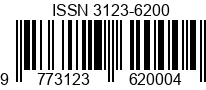
ISSN: 3123-6200 (Online)

JALALAIN: Journal of Qur’an and Hadith Studies
Every manuscript submitted to JALALAIN: Journal of Qur’an and Hadith Studies undergoes a strict plagiarism check using Turnitin or equivalent detection software. The editorial board carefully reviews the similarity report to ensure the authenticity of each work. Manuscripts showing a similarity index higher than 25–30% (excluding references) will be subject to revision or direct rejection. Authors are expected to uphold the principles of academic honesty by properly acknowledging all sources and ensuring their work is free from plagiarism, duplication, and self-plagiarism.
The use of Artificial Intelligence (AI)–based tools such as ChatGPT, Grammarly, Bard, or other similar applications is allowed only to assist authors in improving language clarity, grammar, and structure. However, the journal maintains a firm stance that AI tools should not replace genuine intellectual contribution. The editorial board strictly monitors and evaluates submissions against these rules:
| 01 | Authors may employ AI tools solely for editorial assistance such as refining writing style, correcting grammar, or organizing ideas but AI-generated content must not exceed 30% of the total manuscript. |
| 02 | Any use of AI must be transparently declared in the manuscript, preferably within the Acknowledgment or Methodology section. The type of AI tool and its specific function must be clearly stated. |
| 03 | AI applications are strictly prohibited from generating research data, crafting interpretations, fabricating citations, or constructing scholarly arguments. These remain the sole responsibility of the author(s). |
| 04 | AI systems cannot, under any condition, be listed or credited as co-authors. The integrity, originality, and ethical compliance of each article remain entirely with the human author(s). |
| 05 | All manuscripts are screened not only for plagiarism but also for excessive or undisclosed AI-generated material. Submissions found violating these standards will be rejected at the editorial or review stage. |
The editorial board of JALALAIN is committed to maintaining rigorous ethical standards in scholarly publishing and will take appropriate measures against any misuse of AI or detection of plagiarism that compromises academic authenticity.
JALALAIN: Journal of Qur’an and Hadith Studies
ISSN: 3123-6200 (Online)

Need help? Please contact
the editorial team via WhatsApp.

Click the image above to
download the Article Template.


 |
Yayasan An-Nur Meunara BaroAddress: Jalan Mesjid Meunara Baro No 01, Desa Miruk, Kec. Krueng Barona Jaya, Aceh Besar, Aceh, 23116 E-Mail: nihayahjournal@gmail.com HP/WA: +62 853-6172-8880 
This work is licensed under a Creative Commons Attribution-ShareAlike 4.0 International License. |

Published by An-Nur |